
Let's be real about expectations
Not everyone orgasms the first time they use a lemon vibrator. Some people do. Most don't. And that gap between the Instagram-implied universal pleasure and actual reality is where disappointment happens. Here's the honest version: lemon clitoral vibrators work brilliantly for most people, but "most" is not "all." Your nervous system, anatomy, past experiences, and current stress levels all shape whether you'll feel fireworks or just a humming sensation.
That doesn't mean you're broken. It means you're normal, and you probably just need different information.
Why bodies respond differently to the same vibrator
Clitoral sensitivity exists on a spectrum. Some people have a hypersensitive clitoris where even a light touch feels like too much. Others have lower baseline sensitivity and need more direct stimulation to register much of anything. Neither is better. They're just different wiring.
Lemon vibrators use air-pulse suction technology rather than straight vibration. This means they stimulate the clitoris and the entire clitoral complex (the internal bulbs that extend up into your body) through gentle suction and release patterns. Some nervous systems light up to that sensation immediately. Others find it feels strange at first, or even uncomfortable if the intensity is too high.
Your response also depends on how aroused you already are. A lemon sucker works best when blood flow is already moving toward your genitals. If you start using one when you're not actually turned on yet, it might feel weird or even numb. Arousal is the prerequisite, not the outcome.
Stress, medication, hormones, and sleep all factor in too. A clitoral vibrator won't work the same way if you're exhausted, anxious about something unrelated, or in a medication phase that affects sensation. This isn't a device failure. This is your body being, well, a body.
The sensitivity spectrum and how to navigate it
If you fall on the hypersensitive end of the scale, the issue isn't that lemon vibrators don't work for you. It's that they might need to be approached differently.
For hypersensitive clitorises: Start with the device off. Use the lemon as a manual massager against your body to get used to the shape and weight. Then try the lowest intensity setting with a barrier between the toy and your skin—that could be your underwear, a thin cloth, or even through a lubricated external labium. The suction sensation should feel pleasurable, not sharp or stinging. If your first instinct is "that's too much," you're not being dramatic. Listen to that signal and adjust.
For typical sensitivity: Most people land here. You can usually start at a moderate intensity and work up. Warm-up time matters. Spend 10-15 minutes on other kinds of touch before introducing the vibrator. Foreplay that feels good to you isn't optional context. It's essential setup.
For lower sensitivity: If you've tried a lemon vibrator at full intensity and felt mostly nothing, you're not alone. Your nervous system might need stronger or more varied stimulation. Consider trying a device with multiple suction patterns rather than a single steady pulse. Or pair the vibrator with hand movement and pressure to layer different sensations.
Anatomy matters more than you think
Clitoral size varies significantly, and so does the position and depth of your clitoral complex. Some people have a clitoris positioned such that a suction device hits the exact nerve cluster that sends signals to the brain as pure pleasure. Others have a slightly different geometry where the sensation registers as pressure instead.
This is why some women swear by their first lemon vibrator and others feel like everyone's in on a joke they don't get. You're not broken. Your anatomy is just having a different conversation with the device.
Lubrication changes this too. Air-pulse devices work best with some moisture because the seal needs to be snug enough to create suction. If you're naturally lubricating well, the device works exactly as designed. If you're drier (whether because of hormones, stress, or just how your body is), you might need to add a water-based lube to make the seal work and the sensation feel right.
The mental piece (it's bigger than you expect)
I work with couples and individuals on pleasure regularly, and I can tell you that expectation stress kills arousal faster than almost anything else. You've heard that lemon vibrators are incredible. You spent real money on one. Now you're lying there expecting instant fireworks, and instead you feel a weird suction that doesn't immediately do what you thought it would.
That disappointment tightens your pelvic floor and cuts off the exact neural pathway that would make the device work. You've now created the problem you were worried about.
Try this instead: remove the pressure to have a specific outcome. Use your lemon vibrator as an exploration tool, not a performance demand. Set aside 20 minutes when you're already in a good mood and without time pressure. No goal. No expectation of orgasm. Just curiosity about what different sensations feel like where.
Sometimes the pleasure sneaks up on you when you're not measuring for it. Sometimes it doesn't, and that's actually useful information for next time.
When to try a different approach
If you've given a lemon clitoral vibrator three or four genuine attempts and it's still not working, don't assume you're incompatible with vibrators. Try these adjustments first.
Change the pressure. Use your hand to apply varying amounts of pressure against the device while it's running. The vibration alone might not be enough. The pressure changes the sensation completely.
Add a partner. Having someone else control the device or hold it while you guide the intensity removes some of the performance anxiety that can block pleasure. Exploring lemon vibrators with a partner means you get feedback and can communicate exactly what feels good in real time.
Try different settings. If your lemon vibrator has multiple suction patterns, experiment systematically. Spend time with each pattern. Your body might respond to rhythm and pulse variation more than steady suction.
Give it time. Sometimes your body needs several sessions to recognize a new sensation as pleasurable rather than strange. Your nervous system learns. Stick with it for at least six or seven uses before deciding it's not your thing.
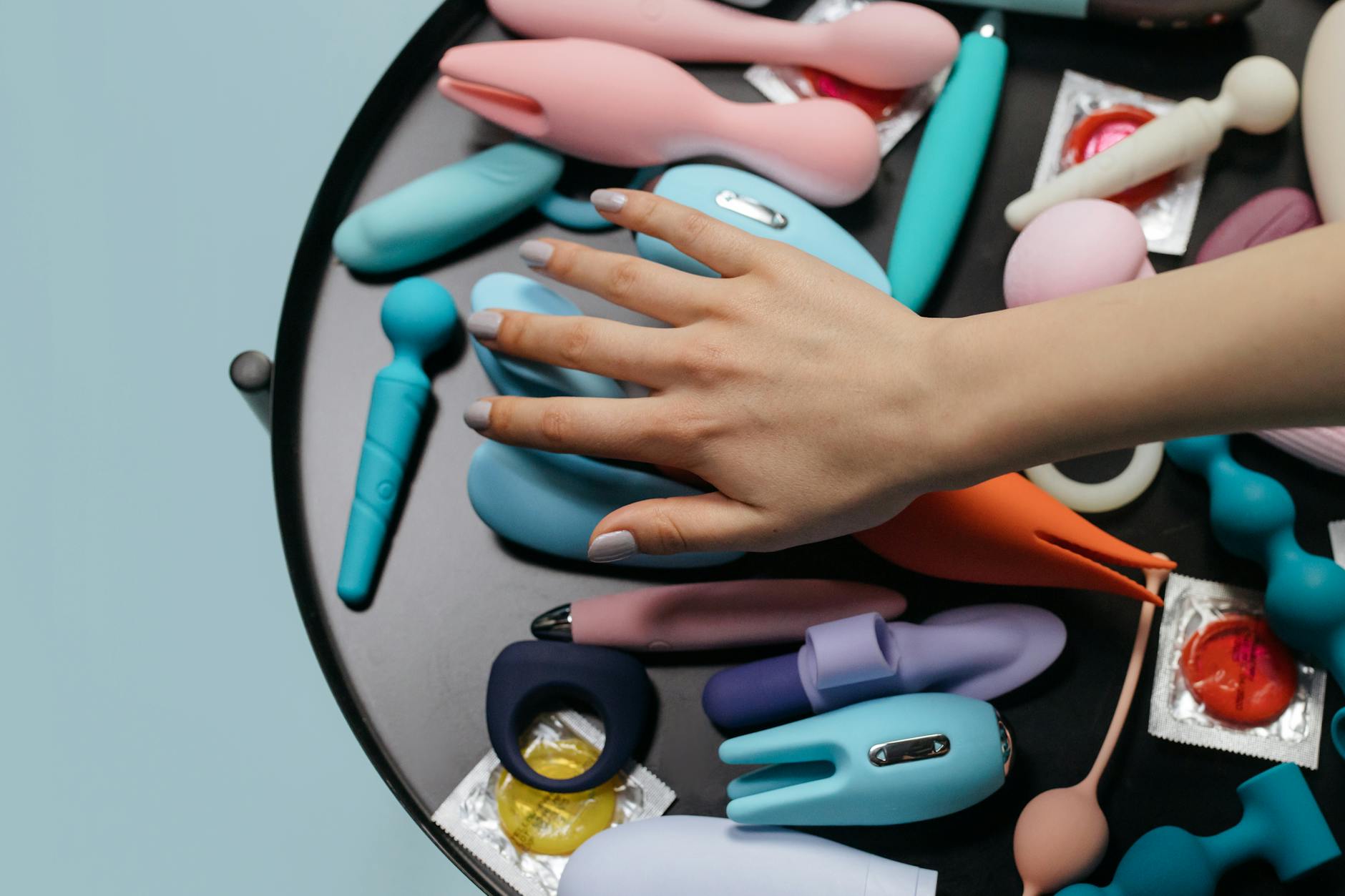
Photo by cottonbro studio on Pexels
Why "not working" sometimes means something else entirely
Here's something I see frequently: someone tries a lemon vibrator, feels nothing or very little, and concludes that they're not a vibrator person. But what they're often experiencing is one of three things that have nothing to do with the device itself.
You're not aroused enough yet. A clitoral vibrator doesn't generate arousal from nothing. It amplifies arousal that's already building. If you start with the vibrator as your opening move, you're skipping the foreplay that gets your nervous system primed. Try instead: do whatever typically turns you on for 10-15 minutes, and then introduce the vibrator when you're already warm and responding.
Your nervous system is in performance mode. If you're thinking "Will this work? Am I doing it right? Should I feel something by now?" your brain is in threat-detection mode, not pleasure mode. Threat mode shuts down sensation. Try silencing your internal commentary. Focus on the physical sensation itself without judgment. This takes practice, but it works.
You're dealing with sensation numbness. If you're on antidepressants, birth control with higher hormone levels, or experiencing chronically high stress, your baseline sensation might be muted right now. That's not permanent, but it also means no vibrator is going to create sensation where your nervous system is dampened. Talk to your doctor about it. Meanwhile, be gentler with yourself. This isn't a device limitation.
The long-tail sensitivity questions
Let me address a few specific scenarios I hear often.
I feel too sensitive the first 10 seconds, then it goes numb. Your nervous system is habituating to the sensation. This is normal. Try taking breaks. Use the device for 30 seconds, pause, then come back to it. Or use it in shorter bursts while you're also being touched elsewhere on your body. The variety keeps your nervous system engaged.
The suction feels weird, not bad, just weird. Your brain is still learning what this sensation means. That's okay. Keep going. Most people report that the sensation shifts from "weird" to "interesting" around session three or four, then to "really good" somewhere after that. Your nervous system is slower to recognize suction as pleasure because it's not something your body usually experiences outside of this context.
I can feel it working, but I can't seem to orgasm. Orgasm isn't the only valid pleasure outcome. Sometimes the path to orgasm gets cluttered with expectation. Use the vibrator to explore sensation without the specific goal of coming. Orgasm often shows up when you've stopped chasing it. And if it doesn't, that's still time spent in pleasure and learning about your own response. That counts.
FAQ: Your questions answered
How long does it usually take for a lemon vibrator to feel good?
Most people report that a lemon clitoral vibrator feels noticeably better by the third or fourth use. Your nervous system is literally learning. The sensation goes from novel and strange to recognizable and pleasant as your brain builds a map for what suction stimulation means. If you're still not feeling much by use six or seven, try one of the adjustment strategies mentioned above rather than writing it off completely.
Does being on birth control change how a vibrator feels?
Yes. Hormonal birth control can decrease clitoral sensitivity, especially with newer formulations that use lower hormone doses. You might need longer warm-up time or slightly higher intensity. It's not about the device. It's your baseline physiology. If you notice a shift in sensation after starting new birth control, that's real. Talk to your doctor about it, and be patient with your body's adjustment.
What if my partner thinks lemon vibrators will make me less interested in them?
This is worth addressing directly. A clitoral vibrator isn't competition. It's information. Using a lemon sucker on yourself (or with your partner) helps you learn what feels good, which makes partnered pleasure better, not worse. Invite them in rather than hiding it. Many couples find that exploring together actually increases intimacy and communication.
Can hypersensitivity get better, or is it permanent?
It's often situational. Stress, hormones, and emotional state all affect clitoral sensitivity. Sometimes what feels too sensitive right now will feel perfect in three months when your stress has lowered or your hormones shifted. Keep checking in with your own response without assuming it's fixed forever. And if it is hypersensitive long-term, you're not limited to avoiding vibrators. You're just working with different settings, barriers, or intensity levels.
Is there a particular type of lemon vibrator that works better for sensitive skin?
Yes. Devices made from medical-grade silicone with smooth finishes are gentler on delicate tissue. Texture matters too. A completely smooth lemon sucker feels different than one with subtle ridges. Learning about different options helps you pick something that matches your specific needs rather than just grabbing the first one you find.
What if I never feel anything, even after multiple tries?
Try shifting context entirely. Use your lemon vibrator when you're feeling genuinely turned on, not "supposed to be." Try it with a partner or in a different setting. Try pairing it with other sensations you know feel good. And consider that you might respond better to different kinds of stimulation altogether. Not everyone's pleasure works the same way, and that's genuinely fine. A vibrator isn't a universal key.
The real takeaway
Lemon vibrators work beautifully for most people. And "most" includes a lot of variation in how, when, and under what conditions they work best. Your job isn't to force yourself to respond the "right way." Your job is to gather information about what your actual body likes and adjust from there. That might mean starting at a lower intensity, taking more time, adding lube, or exploring with a partner. It might mean giving your nervous system a few sessions to learn something new. It might mean this particular device isn't your thing, and that's information too.
What matters is that you stay curious instead of discouraged. Your pleasure is worth the exploration time. And Hello Nancy is here to help you figure it out.