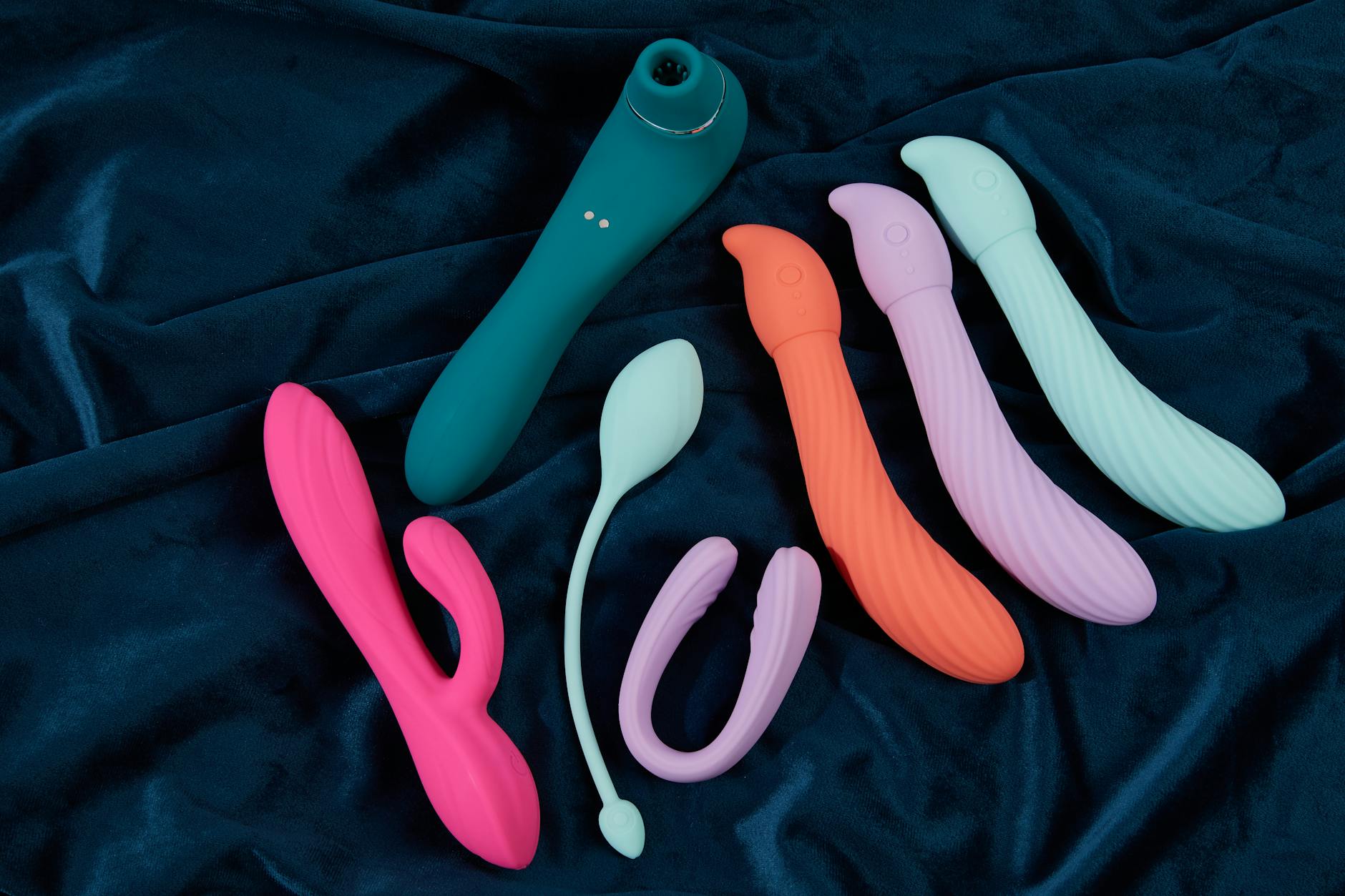
Let's be real about what your partner's hands can and can't do
Your partner can read your breath. They can adjust pressure based on a tiny shift in your hips. They can bring emotional presence that a toy never will. That's all true and it matters. But here's the other truth: a lemon vibrator can deliver something your partner's hands, no matter how skilled or attentive, physically cannot. Precision, consistency, and the kind of sustained stimulation that builds specific neural pathways.
This isn't a comparison about which is better. It's about what each brings, and how they work together.
What a partner's touch does really well
Three things stand out. First, variability. Your partner's hands respond to feedback in real time. If you flinch, they adjust. If you gasp, they know they found something. That responsiveness creates a feedback loop that keeps intimacy present and communicative.
Second, temperature and texture. Warm skin, the slight roughness of fingertips, the weight of a hand resting on your thigh. There's a nervous system component to touch that a toy can't replicate, no matter how thoughtfully designed. That sensory richness matters for arousal and emotional connection.
Third, presence. Your partner is there, noticing you, choosing you in that moment. There's an intimacy in being someone's focus that rewires something in your nervous system. Toys don't and can't offer that.
What a lemon vibrator does that touch cannot
Now flip it. A lemon clitoral vibrator, especially one using suction stimulation, does something mechanically specific. The suction pattern created by a device like the Lem delivers consistent frequency to the clitoris without fatigue, variation, or the natural inconsistency that comes from hand-delivered stimulation.
Consider precision. When your partner uses their hand, they're estimating where the nerve clusters are and adjusting based on your reactions. That's skilled and responsive. But a lemon vibrator's suction mechanism is engineered to target those zones with mechanical accuracy. The frequency doesn't drift. The intensity doesn't fluctuate based on their arm getting tired. It's relentless in a way that human touch cannot be.
Consistency matters more than most people realize. If you've ever had an orgasm that felt frustratingly interrupted or incomplete, it was often because the stimulation pattern changed at a critical moment. A partner changes it (sometimes without realizing it). A lemon sucker doesn't. It maintains the exact pattern that built that arousal, which allows some people to reach orgasm more reliably, especially those who need sustained, unwavering stimulus to cross that threshold.
The suction difference
Lemon vibrators work through suction, not direct vibration. This matters because suction engages a broader area of sensitive tissue and stimulates nerve clusters differently than a traditional vibrator or a partner's fingers. The sensation is more diffuse, less likely to become numb with prolonged use, and for many people, more intense without being painful.
A partner can approximate suction with their mouth, obviously. But they have limits. They need to breathe. They need to rest their jaw. They need to reposition. A lemon clitoral vibrator can maintain that suction pattern indefinitely without fatigue. For people who find suction more effective than direct vibration, that consistency is game-changing.
How they actually work together
Here's where the real conversation starts. You don't have to choose between your partner and a toy. Most couples who've integrated a lemon vibrator into partnered pleasure find that each fills a different role.
Your partner might use their hands and mouth for foreplay, building arousal through that responsive, communicative touch. Then, when you're close to orgasm and need that unwavering consistency to push over the edge, the lemon vibrator takes over. Or they hold it, which changes the dynamic completely. Suddenly they're the operator of that precision, maintaining control over something that's making you feel incredible. That's a different kind of intimacy than fingers alone, and many couples report it strengthens connection rather than replacing it.
Other couples find that using a lemon vibrator solo, and then coming back to partnered touch, actually heightens sensation. The clitoris becomes more responsive. Touch feels more intense. The neural pathways light up differently when you're switching between stimulation types. Some people need that variety to access their deepest pleasure.
The control question
One thing worth naming: some partners feel insecure about toys. "If she needs a vibrator, am I not enough?" That's understandable and also built on a misunderstanding of how the body works.
Your partner's hands are not failing because a lemon vibrator can do something they can't. A hand is a hand. A suction mechanism is a suction mechanism. They're different tools, and you can want both. This is not a referendum on your partner's skill or your desire for them. It's about what your nervous system responds to, and nervous systems are weird and specific and they don't always respond to the same input the same way.
If you're partnered and considering bringing a lemon vibrator into your intimate life, the conversation isn't "I need this instead of you." It's "This does something specific that I respond to, and I want to explore it with you." That distinction changes everything.
Sensitivity and adaptation over time
Here's something most couples don't talk about. If you use the same stimulation with your partner for years, your body adapts. Sensation can become more muted. You might need more pressure, more time, or different patterns to reach orgasm. Some of this is normal desensitization. Some of it is emotional. Some of it is just that the nervous system has learned that input and no longer responds as sharply.
A lemon vibrator introduces novelty. New sensation patterns, new frequency, new type of stimulation. That novelty can reset sensitivity in ways that reinvigorate partnered touch. You come back to your partner's hands with fresh nerve ending capacity, literally more able to feel them. The tool isn't replacing the connection; it's enhancing it.
When precision matters most
For some people, precision isn't a nice-to-have. It's necessary. If you have trouble reaching orgasm, or if you orgasm more easily under very specific conditions, a lemon clitoral vibrator's mechanical consistency can be the difference between frustration and satisfaction.
This is especially true for people who need sustained stimulus at a particular frequency. A partner can try, but they'll naturally vary. Their attention will drift. Their angle will shift. A lemon sucker won't. For people with certain types of clitoral sensitivity, or those recovering from sexual dysfunction, that reliability is what makes orgasm possible.
The communication piece
None of this works without talking about it first. If you're in a relationship and want to introduce a lemon vibrator, the conversation should be grounded in what you need, not what your partner isn't doing. "I want to try this because my body responds to this type of stimulation" is different from "I need this because you're not doing it right."
Bring it into the conversation the same way you'd mention a new position or location you want to try. No shame, no apology. Your pleasure matters. Their pleasure matters. A tool that helps both of you access deeper satisfaction is worth exploring together.
The bottom line
Your partner's touch is irreplaceable for intimacy, presence, and responsive connection. A lemon vibrator brings mechanical precision, consistency, and novel sensation that human touch can't deliver. They're not in competition. They're complementary. The smartest couples use both, understand what each offers, and build pleasure that includes all of it.
FAQ
Do lemon vibrators feel better than partner touch?
Not better, different. A lemon clitoral vibrator delivers consistent suction stimulation that some people find more effective for orgasm. Partner touch offers emotional presence and responsiveness that a toy can't. Many people find they want both, and using them together intensifies overall pleasure rather than replacing one with the other.
Will using a lemon vibrator with my partner make them feel inadequate?
Not if you frame it as exploration, not substitution. If your partner understands that a lemon vibrator does something your body responds to, rather than something they're failing at, most couples find it brings them closer. The conversation matters more than the toy itself.
Can my partner use a lemon vibrator on me?
Absolutely. Many couples find that one partner operating the toy while the other receives creates a new kind of intimacy and control play. Your partner can hold it, control the intensity and pattern, and watch your response in real time. That's partnered pleasure, not solo.
Should I use a lemon vibrator instead of having partnered sex?
No. They serve different purposes. Partnered sex offers connection, reciprocity, and emotional intimacy that solo or partnered toy use doesn't. But adding a lemon vibrator to partnered sex, or using one solo and then returning to partner contact, can deepen overall pleasure. It's additive, not alternative.
How do I know if a lemon vibrator will work for my sensitivity level?
Lemon vibrators using suction stimulation work well for most sensitivity levels because suction is less likely to cause numbing than direct vibration. If you have high sensitivity, start at lower suction patterns. If you have lower sensitivity, the consistent pressure of suction often works better than traditional vibrators. Your best option is to explore what patterns feel right during solo play first, then bring that knowledge into partnered experience.
What if my partner doesn't want to use a toy during sex?
That's their boundary and it deserves respect. But separate conversations might help. One conversation is about using toys together during partnered sex. Another is about using toys solo and what that means for your relationship. You can honor their comfort with partnered play while also maintaining your own pleasure practice separately. Communication is the bridge between both needs.