Here's what nobody tells you about hormonal IUDs
Let's be real. A hormonal IUD or implant is one of the most effective contraceptives on the planet. What your doctor might not mention is that it's also a desire suppressant. Not always. Not for everyone. But often enough that if you've noticed your libido tanking since insertion, you're not imagining it.
The problem isn't psychological. It's chemical. And the solution isn't to white-knuckle through it.
How hormonal contraceptives actually change arousal
When you're on a hormonal IUD (like Mirena) or an implant (like Nexplanon), synthetic progestin enters your bloodstream constantly. Unlike birth control pills, which you might skip or time differently, these methods release hormone steadily for three to seven years. Your body can't take a break from the suppression.
Here's what that does physically. First, it lowers testosterone. Not to zero. But enough to flatten desire, especially in the first six months post-insertion. Second, it can thicken cervical mucus and thin the endometrium, which changes how arousal feels across your whole pelvic floor. Third, and this matters for people using lemon vibrators specifically, it can reduce clitoral sensitivity and slow the speed of arousal.
That last part is the crux. Your brain hasn't lost the capacity to feel pleasure. Your nervous system has just been told to dial down responsiveness. It's protective, from a biological standpoint. It's annoying from an actual-sex standpoint.

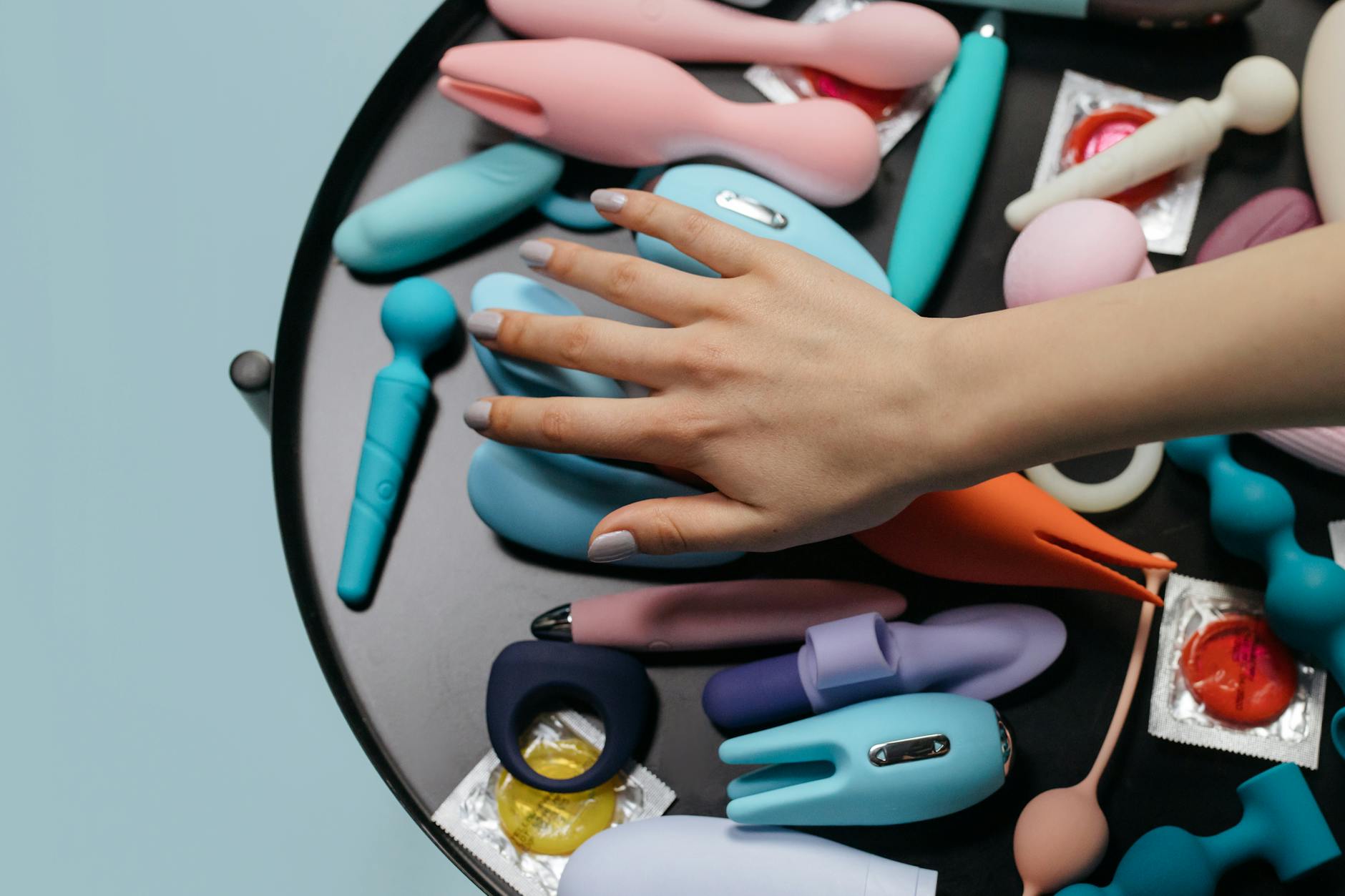
Photo by Madison Inouye on Pexels
Why clitoral suction works differently with hormonal devices
This is where lemon vibrators and other suction toys change the equation. Traditional vibrators rely on direct stimulation and friction. They assume your clitoris is already primed and responsive. When you're suppressed by a hormonal device, that assumption fails.
Suction works through a different mechanism. Instead of vibration alone, suction creates a pressure change that draws tissue into the device. That pressure activates deeper nerve clusters, not just surface sensation. For people on hormonal contraceptives, this matters because it bypasses the dampened superficial sensitivity and hits the pathways that are still firing, even when desire feels flat.
In clinical terms, you're stimulating type C and A-delta nerve fibers that don't require the same hormonal priming as your typical arousal response. In practical terms, you might reach arousal in 15-20 minutes instead of 5, and orgasm might take longer. But it's more likely to happen, and more likely to feel good, than waiting for desire to show up naturally.
The timeline shift you need to know about
One of the biggest frustrations with hormonal IUDs is that arousal doesn't follow the old script. If you used to need five minutes of foreplay, you might now need twenty. If orgasm used to come in three minutes with a vibrator, it might take eight or ten. That's not a failure. It's just the new baseline.
Here's how to adjust. Budget 20-25 minutes for solo exploration when you're testing a lemon vibrator for the first time on a hormonal device. Start on a lower suction setting, even if you've used suction toys before. Your sensitivity is lower, which means your tolerance for intensity is higher, but your arousal path is also longer. Start slow, give your nervous system time to respond, and let intensity build gradually.
Most of my clients find that by week three of consistent use, the timeline shortens. Your body remembers the pathway. It's not that hormones have changed. It's that your brain and clitoris are re-establishing communication.
When suppressed desire is actually depression
Here's the harder conversation. Not all desire loss on a hormonal IUD is just mechanical arousal suppression. Some of it is mood depression. Hormonal contraceptives, especially high-progestin methods like some IUDs, can trigger or worsen depression and anxiety. If you're experiencing flat mood across your whole life, not just in bed, that's a different problem.
In those cases, a lemon vibrator can help. Not because it treats depression. But because pleasure is a physiological anchor. When your brain is chemically depressed, creating a reliable physical sensation of pleasure can sometimes interrupt the cycle. It's not a substitute for talking to your doctor. But research on lemon vibrators and pleasure recovery shows that consistent solo pleasure practice can slowly rebuild neural pathways for joy.
If mood symptoms are severe, talk to your prescriber about switching to a non-hormonal IUD (copper) or a different method altogether. The device shouldn't cost you your mental health.
The partner variable
When you're using a lemon vibrator solo, timeline and intensity are entirely yours to control. That changes when a partner is involved. Many of my clients report that partners interpret the longer arousal timeline as a lack of interest. It's not. It's biochemistry. But the emotional consequence is real.
Here's what helps. Tell your partner upfront: "On this device, my body needs more time to wake up. That's not about you. That's about hormones. A lemon vibrator actually solves that problem because it doesn't require me to be naturally aroused to start." Then use it together. Let your partner see that you go from neutral to satisfied in 15 minutes instead of frustrated in 5.
Some couples find that incorporating a lemon vibrator into partnered sex actually strengthens things because it removes the pressure for one person's body to be ready on the other's timeline. If your partner wants more frequency than you do, a vibrator can be a bridge.
How to know if it's the IUD or something else
Not every drop in libido is the contraceptive. Stress, relationship strain, medication (especially SSRIs), sleep deprivation, and life transitions all suppress desire. The IUD might be 40 percent of the problem and everything else 60 percent.
One way to test: if your desire suppression started within two weeks of insertion and has stayed steady, it's probably the device. If it's getting worse over time, or if it came on after you'd been fine for a year, something else might be happening.
If you're on other medications, especially antidepressants or anxiety meds, talk to your prescriber about how they interact with your hormonal device. Sometimes a small dose adjustment helps. Sometimes you need the vibrator to work harder because your whole nervous system is dampened.
The practical setup that actually works
You've got time. You've got patience. Here's how to use a lemon vibrator successfully when you're on a hormonal device.
First, use water-based lubricant. Hormonal suppression sometimes means less natural lubrication. Lube helps the suction seal properly.
Second, warm up for longer than you think you need. Ten minutes of non-genital touch. Breathing. Maybe some content that makes you feel something.
Third, start the vibrator on pattern one or two. Let sensation build. Move to higher intensity only if it feels good. You don't need to reach maximum intensity to orgasm. You just need to find your threshold.
Fourth, give yourself permission for this to take 20 minutes. That's not long. That's realistic.
Fifth, do this consistently. Three times a week is better than once a month. Your nervous system learns faster with repetition.
What to do if the IUD is the actual problem
If you've given it six months and you're still experiencing significant desire suppression, mood issues, or any physical pain, you have options. Talk to your gynecologist about switching to copper IUD, which has zero systemic hormone absorption. Or explore other methods. Implants are hard to remove, but IUDs come out in seconds. If the device is tanking your quality of life, it's not the right choice for you.
Sometimes people stay on hormonal IUDs because they're effective and forget to ask if they're happy. You get to want both. Effective contraception and actual desire. If the current device isn't delivering that, change it.
People also ask
How long does it take for desire to come back after removing a hormonal IUD?
Three to six months, usually. Hormones don't flip back overnight. Your body has been in suppression mode for however long you had the device. Once it's out, your ovaries restart production, but it takes time for testosterone and estrogen to stabilize. Most people notice a gradual return of baseline desire around month two or three. For some, it takes longer. If desire doesn't return after six months post-removal, that suggests something else was driving the suppression.
Can you use a Lem or lemon vibrator right after IUD insertion?
Yes, but wait 48 hours first. Your cervix is irritated post-insertion and needs a short rest. After that, gentle suction is actually fine. Some people find that the suction helps them understand what's changed in their body post-insertion. Keep it on lower settings for the first week while your body adjusts.
Does copper IUD suppress desire like hormonal devices do?
Not systemically, no. Copper IUDs work locally in the uterus and don't release hormones into your bloodstream. Most people experience zero change in libido. Some even report an increase because they're not on synthetic hormones. If desire suppression is the main side effect you're experiencing with a hormonal device, switching to copper often solves it completely.
Will a lemon vibrator help if I'm experiencing numbing from the hormonal device?
Yes, but understand what's happening. The numbness is real. A lemon clitoral vibrator or suction toy can't reverse hormone suppression. What it can do is create a physical sensation that your nervous system recognizes as pleasure, even when desire feels flat. That sometimes reboots the whole response. Think of it as a circuit breaker for your arousal system.
Is it normal to need lube with a hormonal IUD when using clitoral vibrators?
Completely normal. Hormonal devices often reduce natural lubrication. Some people need lube even when they're aroused because the tissue changes. Using lube isn't a sign something's wrong. It's just adaptation. Water-based works best with silicone toys and is comfortable for most people.
Can switching IUD brands help if desire is suppressed?
Sometimes. Mirena releases more progestin than Skyla or Kyleena. If you're on Mirena and desire suppression is severe, asking your doctor about a lower-hormone option might help. But all hormonal IUDs suppress desire to some degree. If suppression is the main issue, non-hormonal is usually the better choice.
The bottom line
A hormonal IUD or implant doesn't end your ability to feel pleasure. It changes the pathway. It lengthens the timeline. It requires a different tool and a different rhythm. A lemon vibrator, designed for suction rather than just vibration, actually aligns with how your nervous system is working under hormonal suppression. You're not broken. You're just working with different hardware. Once you know how to use it, pleasure is still very much within reach.