Let's be real about the awkwardness
You've thought about bringing a lemon vibrator into your relationship. Maybe you've researched lemon suction toys online at 11 p.m. Maybe you've added one to a cart and closed the tab three times. The thing stopping you isn't the vibrator itself. It's the conversation.
Here's what I've learned working with couples for twenty years: the introduction matters infinitely more than the toy. Get the conversation right, and a lemon vibrator becomes something you explore together. Get it wrong, and it becomes a thing that happened once that you both pretend to forget.
Let me walk you through how to actually do this.
Why lemon vibrators work differently in couples
A lemon vibrator isn't a replacement. That's the first thing to understand, because that's the fear that usually stops people from mentioning it.
When I talk to partners who are nervous about introducing any vibrator, including lemon clitoral vibrators, the underlying worry is almost always the same: "Does this mean I'm not enough?" The answer, honestly, is no. What it means is that pleasure is weird and specific and sometimes a different kind of stimulation creates a better experience. That's not a reflection on the relationship. That's just how bodies work.
Lemon suction toys work particularly well for couples because they create a different sensation than traditional penetration or hand stimulation. The suction mechanism feels unlike anything else, which means it's not competing with what a partner can do. It's adding something genuinely new. Psychologically, that shift matters. It's not a replacement. It's an expansion.
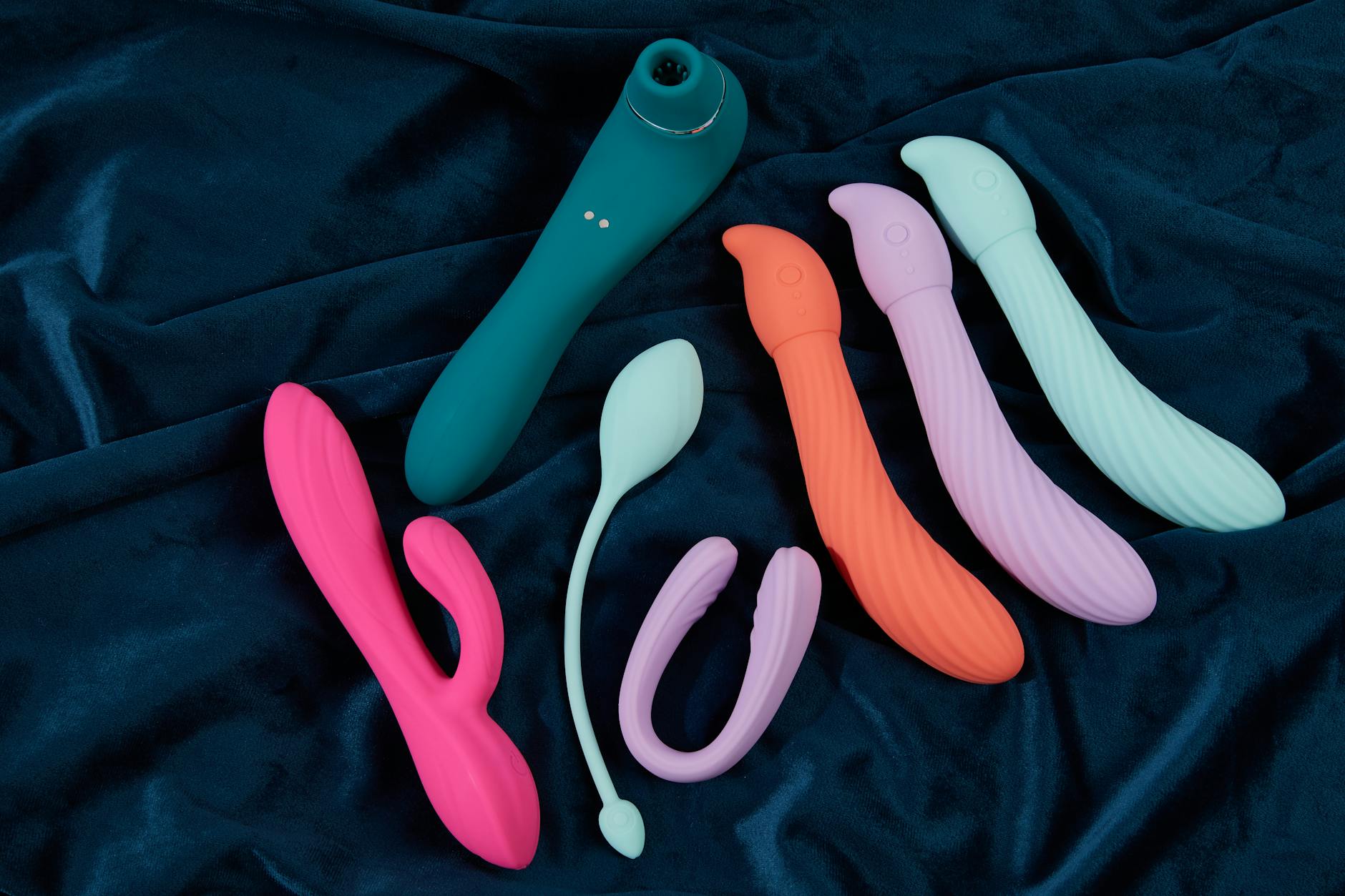
Photo by IFONNX Toys on Pexels
The conversation: timing and framing
Don't do this during sex. Don't do it right before sex. Don't do it when you're already vulnerable or when your partner is stressed about something else.
Best timing: a moment when you're both relaxed, not rushed, and ideally not in the bedroom. A walk, a car ride, the couch on a weekend afternoon. The reason is simple. You want this to feel like a conversation you're having together, not a sudden proposal that feels high-stakes.
How to start: "I've been thinking about something and I want to run it by you. No pressure at all, but I'm curious if you'd be interested in exploring this together." That's it. Curiosity, collaboration, zero pressure.
Then you name the thing. "I've been reading about lemon vibrators" or "there's this toy I've been thinking about trying." The specificity matters because it shows you've actually thought about it and done research, not just panicked and grabbed something random.
What not to do: don't frame it as solving a "problem." Don't say "I read that you should use vibrators." Don't send a product link without context and hope they get it. Don't wait until you're frustrated or feel like you need to justify wanting pleasure.
Reading your partner's response
You'll get one of a few reactions:
"That sounds interesting." Congratulations. You can move to the next phase. Ask what they're curious about. Do they want to choose it together? Do they want to research? Do they want to use it right away or wait?
"I don't know, I feel weird about that." This is normal and not a rejection. Ask what feels weird. Is it jealousy? Is it anxiety about performance? Is it just that the idea came out of nowhere? Most of the time, sitting with that feeling for a few days helps. You're not trying to convince them. You're trying to understand.
Dismissive or defensive. "That's weird" or "I'm fine without that" or "I don't need a toy to satisfy you." This is where you take a breath. Your partner may feel threatened or misunderstood. Your job isn't to defend your interest. Your job is to clarify intent. "I'm not saying anything is wrong. I just thought it might be fun to try together. But if you're not into it, that's totally fine."
Then you drop it. Not forever, but for now. Sometimes people need time to get comfortable with an idea.
If they say yes: how to pick one together
If your partner is genuinely interested, do some research as a team. Look at lemon clitoral vibrators together. Read reviews. Ask questions like "What appeals to you?" and "What concerns you?"
When it comes to lemon vibrators specifically, the fact that they're suction-based (not traditional vibration) is worth mentioning. It feels gentler and less intense for some people, which makes them a great option if either of you prefers a softer sensation. They're also quieter than some other adult toys, which matters if you have roommates or kids in the house.
Consider your partner's sensitivity too. If they're sensitive to strong vibration, a lemon suction toy is often a better fit than traditional clitoral vibrators. That's not a weakness. It's just data that helps you pick something you'll both actually enjoy.
Your first time using it together
Don't put pressure on performance. Don't expect it to be life-changing the first time. You're both figuring out a new thing together, and that's awkward by definition.
Start with some sexual activity you both enjoy, get aroused together, and then introduce the lemon vibrator as you're already comfortable with each other. Lower pressure means higher pleasure. This isn't the time to try something completely new sexually. It's the time to add one new element to something familiar.
Consider who controls it. Some couples like the receiving partner to hold it. Some prefer the other partner to operate it so the receiver can focus on sensation. Some take turns. There's no right answer. You're figuring out what feels good.
If it doesn't feel amazing, that's okay too. Not every toy works for every body. You tried it. You learned something. That's the whole point.
What often surprises couples
I talk to a lot of people after they've introduced a vibrator into their relationship, including lemon sexual toys. Here's what comes up repeatedly:
First, it's often less awkward than they expected. The anticipatory dread is usually worse than the actual conversation.
Second, it creates a weird kind of intimacy. You're both acknowledging that pleasure matters and you're both willing to experiment together. That's vulnerable. That builds connection.
Third, sometimes it doesn't work out, and that's fine too. But attempting it together creates a shared inside joke or a story that bonds you. You did something a little scary as a team.
Fourth, it sometimes opens conversations about what else you both want, what hasn't been mentioned, what would feel good. Once you've broken the seal on "we can talk about and try new things," a lot of other conversations become easier.
If your partner initiates it
If they bring it up first, listen without defensiveness. They've probably thought about it as much as you have and felt just as nervous. This is not a reflection on you or your performance. It's them expressing what they want.
Ask questions. Be curious. The worst thing you can do is make them regret bringing it up. The best thing you can do is take it seriously and explore it with genuine interest, even if you're uncertain at first.
The bigger picture
Incorporating a lemon clitoral vibrator or any toy into your partnership is about more than pleasure. It's about building a relationship where both people feel comfortable asking for what they want. It's about acknowledging that good sex isn't static. It's about saying "I want to keep exploring with you."
That conversation, the one that feels scary now, often becomes one of the most connecting things you do together.
FAQ: Couples and Lemon Vibrators
How do I know if my partner will be offended?
You don't, which is why the tone matters more than the content. If you frame it as "I'd like to explore this with you" instead of "you're not doing enough," you're already in better territory. Most partners aren't offended by the toy itself. They're offended by feeling blamed or inadequate. Don't trigger that, and you're usually fine.
What if they say no and I still want to try a lemon vibrator?
You can use one solo, and that's completely valid. But if the idea was to use it together, respect their boundary. Pushing past a no turns this into resentment. Sometimes giving someone time helps. Sometimes it doesn't. Either way, their comfort matters.
Are lemon suction vibrators better for couples than traditional vibrators?
Not objectively. Better depends on what feels good to the person using it. But lemon suction toys have some advantages in couples settings. They're quieter, they feel different from partner stimulation, and the sensation is often gentler, which works for people who find traditional vibrators too intense.
How do we handle it if one of us doesn't enjoy it?
Talk about it without blame. "That didn't feel as good as I expected" is not the same as "you did it wrong." If it's a toy compatibility issue, try a different setting or intensity. If it's just not for you, that's information. Not everything works for everyone. Learning that is useful.
Should we use it every time we have sex?
No. Use it when you both feel like it. The best part of adding a tool to your sexual life is that it's optional. Sometimes you want the simplicity of what you already do. Sometimes you want to add the vibrator. Both are good.
What if I'm embarrassed to buy one?
Hello Nancy's website exists specifically so you don't have to walk into a physical store or explain anything to anyone. You can order online, have it delivered discretely, and open it in privacy. Embarrassment usually disappears the moment you realize you're ordering from a brand that treats this as totally normal. Because it is.
The actual move
The scariest part of this whole thing isn't the vibrator. It's the vulnerability of asking for what you want. But that's also the part that strengthens a relationship. You're saying "I trust you enough to tell you what would feel good." That matters.
Start the conversation this week. Not next month. Not when you feel more confident. This week. The worst that happens is you get a little awkward for five minutes and then you either move forward or you don't. The best thing that happens is you open a door you both want to walk through.
Your pleasure matters. Asking for it matters. And doing it together matters most of all.