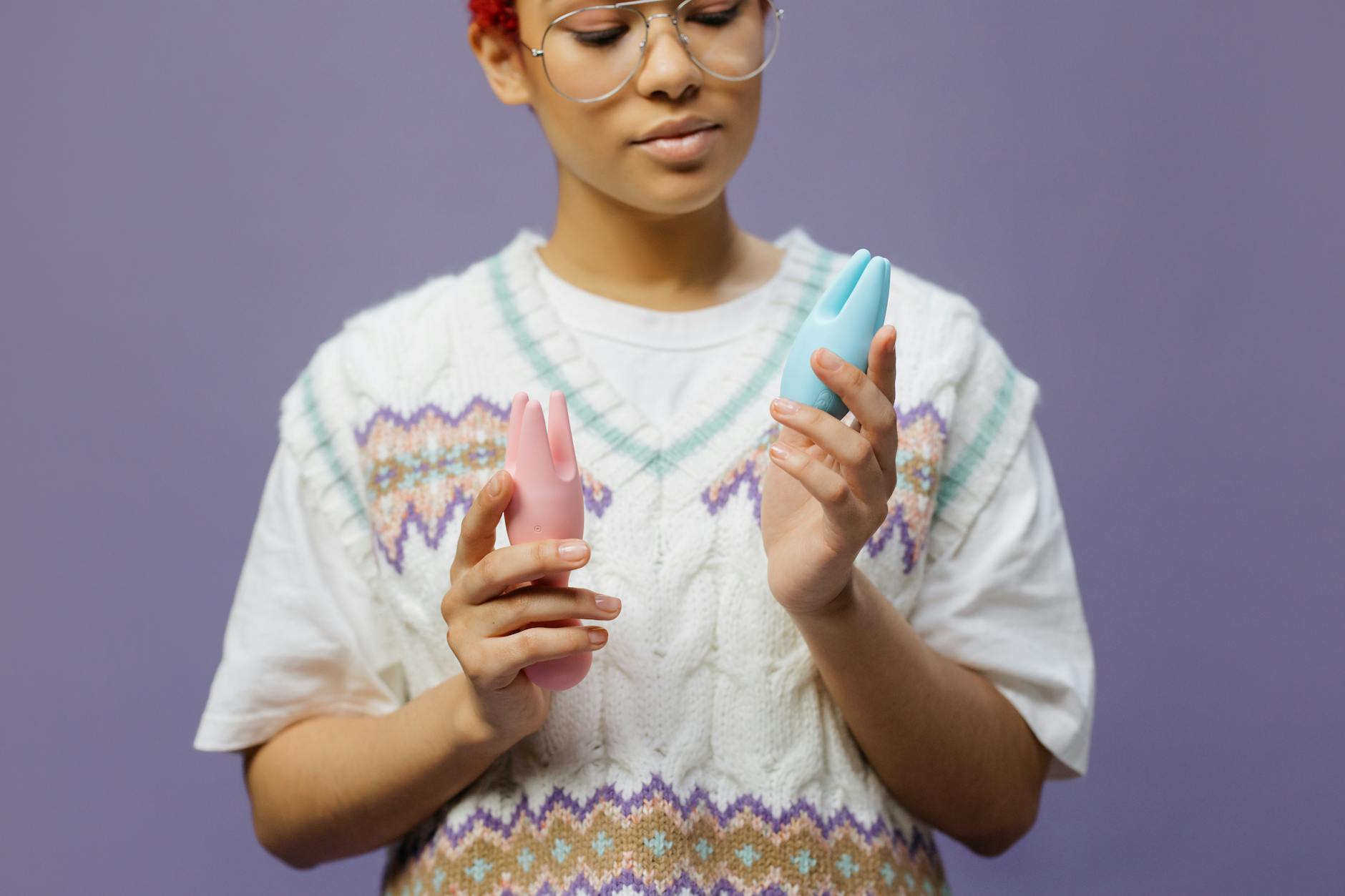
The tissue nobody talks about
Your clitoris isn't just a single point of sensation. It's a complex network of tissue, nerves, and erectile structures that sit beneath the surface. When that tissue thickens, everything changes. Not in a catastrophic way, but noticeably.
Thickened clitoral tissue happens for real reasons. Scarring from pelvic floor trauma, chronic tension in the pelvic floor muscles, hormonal shifts, or inflammation from endometriosis can all cause the tissue to become denser and less reactive to traditional vibration. If you've noticed that your usual toy feels muffled or that you need way more intensity than you used to, this might be what's happening.
Here's the thing nobody explains clearly: lemon vibrators work differently on thick tissue because they don't rely on vibration alone. The suction mechanism creates a totally different kind of stimulation.
How thick tissue responds differently
When clitoral tissue is thin and responsive, traditional vibrators move the tissue itself. The vibration travels through soft, pliable layers, and the nerves fire easily. But thick tissue doesn't move as fluidly. It's denser, more resistant. A standard vibrator can feel like you're trying to wake someone up by shaking them while they're wearing three sweaters.
Thickened tissue also means the nerves are sometimes compressed or sitting at slightly different angles. The stimulation that used to hit them directly might now be passing nearby but not landing with the same precision. That's not a sign you're broken. It's anatomy responding to stress or change.
Lemon clitoral vibrators use a completely different principle. The suction action doesn't vibrate the tissue. Instead, it creates a gentle pulling sensation that draws blood to the area and stimulates the nerve endings through pressure and rhythm, not shaking. That mechanism actually works better on thicker tissue because it doesn't need the tissue to flex and move. It works with the density instead of fighting it.
Why suction feels more effective on thickened tissue
Think of it like this: a vibrator tries to wake up a thick tissue by shaking it. A lemon suction toy wakes it up by gently gathering it and releasing, gathering and releasing. The repeated compression and decompression activates nerves that vibration might miss entirely.
Thickened tissue also tends to have reduced blood flow. The suction mechanism actually improves that by pulling blood into the area, which increases sensitivity over time. After three to five uses with a lemon vibrator, many people report that sensation starts coming back because the tissue is getting more oxygenated and responsive.
This is also why the intensity on a lemon vibrator often feels more effective even at lower pattern settings. You're not fighting against tissue density. You're working with it.
Adjusting your technique for thick tissue
If you're new to using a lemon vibrator on thickened tissue, these tweaks matter:
Start at pattern one or two. Even if you usually run traditional vibrators at level four or five, the suction sensation is so different that lower feels genuinely more intense on thick tissue. Your body will tell you when to turn it up.
Use lubrication generously. Thick tissue benefits from more glide. Water-based lube helps the suction seal better and prevents the repeated gathering from feeling rough. This isn't about adding sensation. It's about protecting the tissue while you're reintroducing it to stimulation.
Spend longer on warm-up. Thick tissue often comes with reduced responsiveness generally. Give yourself 15 to 20 minutes before you move to the lemon vibrator. Use your fingers or a partner's touch to get the blood moving first.
Experiment with angle. Because the stimulation works differently, you might find that a slight angle (not directly perpendicular to the tissue) feels better than straight-on pressure. This is especially true if scarring is involved. The nerve pathways might not run directly down the center.
The rebound effect you might notice
Here's something counterintuitive that happens with thick clitoral tissue and lemon vibrators: as you use it consistently, the tissue often starts to thin back out slightly and sensation increases. This isn't a magic cure. It's just that the repeated gentle stimulation, combined with improved blood flow, helps reduce inflammation and tension.
You might notice the first few sessions feel muted, but by week two or three, the same pattern that felt gentle suddenly feels more intense. That's not your toy changing. That's your tissue responding. Don't crank up the intensity because you're chasing the sensation you're used to. Let it settle in.
When thick tissue needs extra support
If thick clitoral tissue came from pelvic floor tension (which is common), a lemon vibrator alone might not be the full answer. The tension needs attention too. Pelvic floor physical therapy or consistent stretching and relaxation work makes a massive difference when paired with the right toy.
Similarly, if the thickening came from inflammation or endometriosis, addressing that condition with your doctor matters first. A toy can help you rebuild sensation once you're managing the underlying cause.
Lemon vibrators aren't a medical intervention. They're tools that work with your body's changes instead of against them. On thick tissue, that distinction actually matters more than with sensitive tissue, because you're not just looking for pleasure. You're looking for sensation to return.
The psychological piece
Thickened clitoral tissue usually comes with some frustration attached. You remember what sensation used to feel like. Everything feels muffled now, and it's easy to blame yourself or your body. It's worth naming that this is temporary and fixable. Tissue responds to consistent, gentle stimulation. A lemon vibrator, used correctly on thick tissue, is exactly that.
Many people find that rebuilding sensation with the right toy actually deepens their understanding of their own body. You get to know the tissue intimately again. What angles work, what patterns feel best, what warm-up time lets sensation actually bloom. That knowledge is valuable whether the tissue is thick, thin, or somewhere in between.
Frequently asked questions
What causes clitoral tissue to thicken in the first place?
Thickening happens from several sources. Chronic pelvic floor tension pulls and compresses the tissue over time. Scarring from childbirth, episiotomy, or trauma changes the tissue permanently. Hormonal shifts (usually lower estrogen) can make tissue denser and less elastic. Inflammation from endometriosis, infections, or repeated irritation builds up layers of scar tissue. It's rarely just one cause.
Can you reverse thickened clitoral tissue?
Partially, yes. Inflammation can reduce with treatment and time. Tension can release with pelvic floor work. Tissue can regain some elasticity with consistent gentle stimulation and improved blood flow. But scarring doesn't fully reverse. That's why adaptation matters more than reversal. A lemon vibrator helps you work with the tissue as it actually is now.
How long does it take to feel a difference using a lemon vibrator on thick tissue?
Most people notice something within two to three weeks of consistent use, two to three times per week. The first week might feel subtle. Week two often brings a shift where the sensation starts to feel less muffled. This isn't sudden or dramatic. It's a gradual waking up.
Should I use a lemon vibrator if I have endometriosis and thick clitoral tissue?
Yes, with a few caveats. Endometriosis inflammation often contributes to tissue thickening and reduced sensation. A lemon vibrator can help rebuild pleasure once the inflammation is being managed. But if you're in an acute flare, you might want to wait. Talk to your doctor. If you get the green light, start gently and watch for any increase in pain or inflammation.
Can thick clitoral tissue affect my ability to orgasm?
It can make orgasm take longer and feel less intense, yes. But it doesn't eliminate the possibility. Thickened tissue just means the nerve pathways need different stimulation to light up. A lemon vibrator, with its suction mechanism, often bypasses the problem entirely because it works differently than traditional vibration. Many people discover orgasms actually feel more powerful once they rebuild sensation.
Is thick clitoral tissue permanent?
Not entirely. Scar tissue doesn't go away, but inflammation does reduce. Tension releases. Tissue elasticity improves with hormones and stimulation. The goal isn't to get back to exactly how it was. It's to rebuild sensation and pleasure with the tissue you have now. That's usually better than the original, because you understand it now.
Your next step
If you're dealing with thick clitoral tissue, the first move isn't necessarily buying a toy. It's understanding what caused the thickening. Talk to a pelvic floor physical therapist or a gynecologist who knows about sensitivity changes. Once you know what you're working with, a lemon vibrator becomes a tool that actually makes sense instead of just another toy you're hoping works.
Your pleasure matters, even when the tissue changes. Especially then. The fact that sensation has shifted doesn't mean you've lost it. It means you get to discover it again with new information about what your body actually responds to.