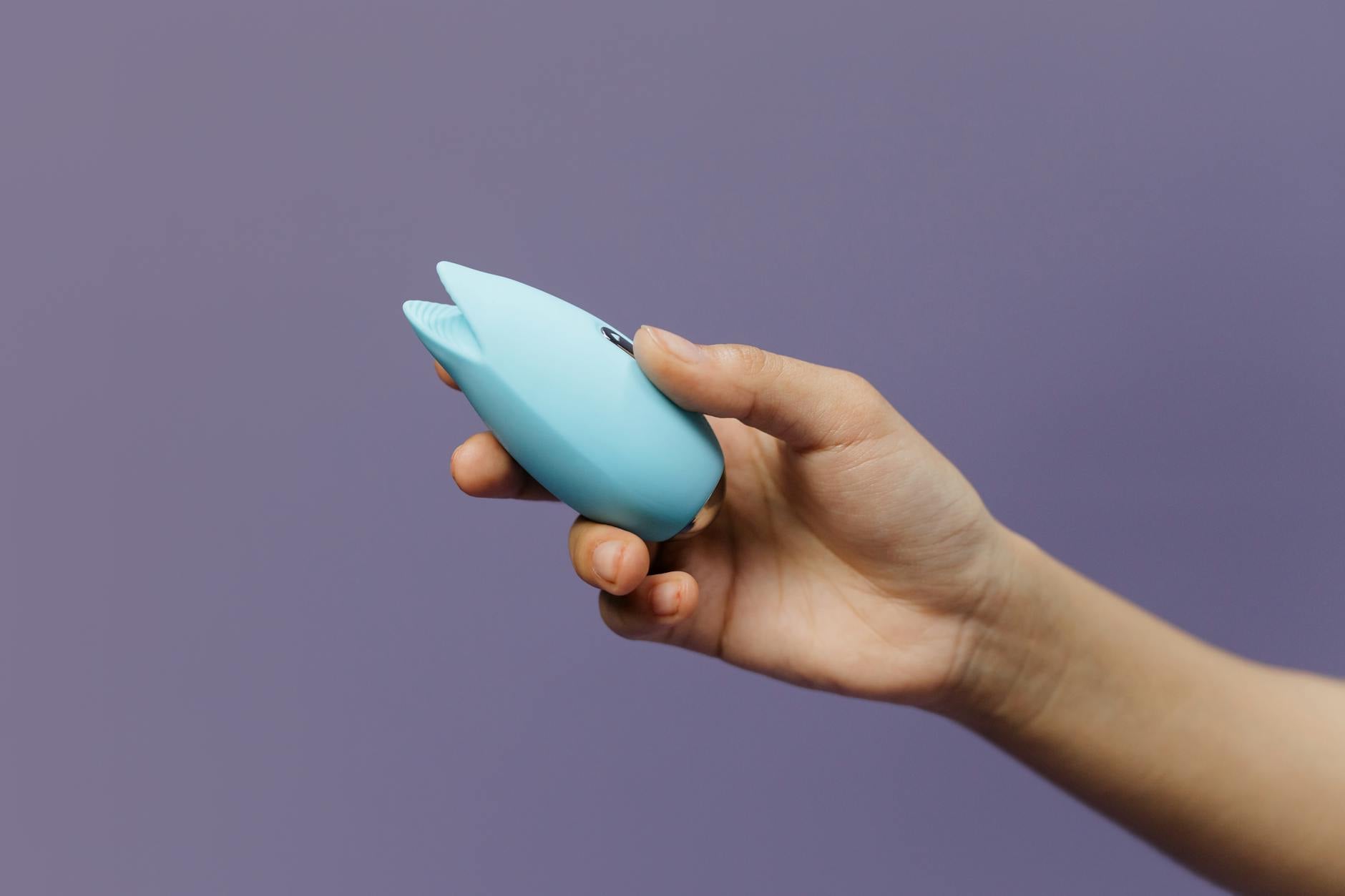
Let's talk about the thing nobody mentions
You've been on birth control for years. You know how it feels. Then one day you pick up your lemon vibrator, press it to your body, and it feels like you're waiting for a subway that's running late. Nothing's broken. Your body just moved at a different speed than it used to.
This is real. It's not in your head. And it's wildly common with hormonal contraceptives, especially when you switch formulations or have been using them for months or years.
Here's the physiological truth: birth control changes your baseline testosterone, which affects arousal speed and clitoral sensitivity. That shift doesn't disappear just because you're using a more effective tool like a lemon clitoral vibrator. Instead, you need to understand what's changed so you can work with your body instead of against it.
How hormonal contraceptives affect arousal
Most birth control methods work by suppressing testosterone and elevating estrogen and progestin levels. This is brilliant for preventing pregnancy. It's less brilliant for sexual response.
Testosterone isn't just a male hormone. People with ovaries produce it too, and it's a major driver of sexual desire and arousal speed. When you're on hormonal contraceptives, your testosterone levels drop by about 30 to 40 percent. That's significant. Your brain notices. Your body notices. Your clitoris notices.
What this means in practice: arousal takes longer to build. The rush you might have felt before taking birth control, that quick climb to readiness, gets flattened. Instead of a sharp incline, it's a gentler slope. Clitoral tissue becomes less engorged, less reactive, less quick to wake up.
Here's the thing that gets people: none of this is a medical problem. Your body isn't broken. Your contraceptive isn't failing you. This is just how hormones work. But it does change how you interact with tools like lemon vibrators, which rely on sensitivity and blood flow to deliver the most satisfying results.
Why lemon vibrators specifically are affected
A lemon sucker uses gentle suction to stimulate the thousands of nerve endings in your clitoris. This works beautifully when blood is flowing freely to the area and clitoral tissue is responsive. But when testosterone is suppressed, blood flow to the clitoris decreases. Tissue is less engorged. Sensitivity shifts.
You might notice that intensity levels 1 and 2 feel almost nothing like they used to. You might find yourself jumping to level 4 or 5 when you'd never needed that before. Or you might notice that even at higher intensities, something feels less sharp, less defined.
This doesn't mean lemon vibrators don't work for you. It means you're working with different starting conditions. A person on hormonal contraceptives often needs more warm-up time, more sustained stimulation, and a slightly different approach to intensity progression.
The warm-up time shift
One of the biggest changes I see is arousal timeline. Before hormonal contraceptives, maybe 10 minutes of stimulation got you there. On hormonal birth control, you might need 20 to 30 minutes.
This isn't laziness. It's not psychological. It's a direct effect of lower testosterone and the resulting decrease in genital blood flow. Your body can absolutely reach orgasm. It just needs more time to build the pressure needed to cross that threshold.
Here's a practical strategy: separate your warm-up phase from your orgasm phase. Spend 10 to 15 minutes on foreplay, partnered stimulation, or internal touch. Let your arousal build without focusing on intensity or orgasm outcome. Then introduce your lemon vibrator when you're already partially aroused. You'll notice it works faster and feels more responsive when you're not starting from baseline.
Clitoral sensitivity changes (and what helps)
Beyond arousal speed, clitoral sensitivity itself shifts on hormonal contraceptives. Some people report that direct stimulation feels almost too intense. Others say it feels duller. Both are common. Both are reversible if you stop the contraceptive, but most people aren't doing that just for pleasure.
If you find direct suction feels overwhelming, try these adjustments. Position the lemon vibrator slightly off-center rather than directly on the clitoris. Many people find the stimulation feels smoother and more sustained this way. Or cover the opening with your fingertip to diffuse the suction slightly. This sounds weird, but it genuinely changes the sensation.
If you find it feels too subtle, you might need longer warm-up time first, or you might need to stack patterns. Many lemon vibrators let you layer sensations. Start at a lower intensity and let it build for several minutes before switching to a more complex pattern.
When to consider switching methods
Some people thrive on hormonal contraceptives despite the arousal changes. Others find the sexual side effects unbearable. This is worth evaluating honestly.
If you're experiencing:
- Complete loss of sexual desire (not just slower arousal)
- Pain during sex or arousal
- Difficulty reaching orgasm even after extended warm-up
- Persistent emotional numbness around pleasure
Then you might benefit from discussing alternative contraceptive options with your gynecologist. Copper IUDs, for instance, don't affect testosterone levels. Some people find their arousal and sensitivity return within weeks of switching.
But if you're just noticing slower arousal and adjusted sensitivity, these are manageable. They don't require you to change contraceptives. They just require you to adjust your expectations and approach.
The relationship dimension
If you're partnered, this becomes a communication issue too. Your partner might notice you need longer warm-up time. They might interpret it as lower desire or decreased attraction. Naming the physiological reason up front prevents that story from taking hold.
A useful conversation sounds like: "My birth control affects how quickly my body responds to stimulation. It's not about you or how I feel. It's just timing. I need about 15 more minutes of warm-up before things feel as responsive."
This shifts the dynamic from "something's wrong with me" to "here's what works for my body right now." And honestly, most partners find that level of clarity deeply sexy.
Timing around your cycle (even with hormonal contraceptives)
Here's a secret: even on hormonal birth control, your body still has a residual cycle. It's not the dramatic peaks of an unmedicated cycle, but it's there. You might notice subtle shifts in sensitivity across the month.
Some people report that sensitivity is highest right after their placebo week. Others notice it shifts around ovulation (which technically doesn't happen on hormonal contraceptives, but your body still gets hormonal signals that mimic the timing). Track your own patterns for two or three months and you might find a window where lemon vibrators feel more responsive.
Does this mean you can only have great orgasms at certain points? No. But it does mean you can work with your natural rhythms instead of fighting them.
What about switching birth control formulas
Not all hormonal contraceptives affect arousal equally. The dose matters. The ratio of estrogen to progestin matters. The specific progestin matters.
If you've been on the same birth control for years and lately you're noticing slower arousal, ask your gynecologist about trying a lower-dose formulation or a different type of progestin. Some people find that adjusting the hormone ratio restores more of their baseline arousal speed without sacrificing contraceptive efficacy.
This isn't guaranteed. But it's worth exploring if the side effects are significant enough to affect your quality of life.
How to work with lemon vibrators on birth control
Put all of this together and here's the practical playbook.
First, adjust your expectations around speed. You're not slower because something's wrong. You're on a different timeline because of hormones. Budget 20 to 30 minutes for the full experience, with at least 15 minutes of arousal building before you bring in the vibrator.
Second, experiment with positioning. Try off-center stimulation or diffused suction. Let the lemon vibrator build gradually rather than jumping straight to high intensities.
Third, track your patterns. Notice if certain times of month feel more responsive. Notice if different warm-up activities make a difference. Your body's giving you data. Listen to it.
Fourth, have the conversation with your partner if there is one. Make it clear that this is hormonal, not relational. Adjust expectations together. Make the longer warm-up phase a feature, not a bug.
And if none of this feels workable, if the sexual side effects are genuinely limiting your life, bring it up with your gynecologist. There are options.
One more thing
Birth control is valuable. It gives you choices and autonomy. But so is pleasure. These things aren't in conflict. Your lemon vibrator will work. It will work brilliantly. You just might need to adjust the conditions slightly to let it do its job.
People also ask
Does birth control permanently change clitoral sensitivity?
No. Clitoral sensitivity returns to baseline once you stop hormonal contraceptives. The changes you're experiencing are reversible. That said, it might take a few weeks or even a couple of months for your arousal speed and tissue sensitivity to fully return to their pre-contraceptive baseline.
Can I use a lemon vibrator immediately after starting birth control?
Yes, but you might notice it feels different than you expect. Your body is still adjusting to the new hormone levels, which takes about three months for most people. Give yourself a full cycle or two before deciding whether the changes are manageable. Your baseline sensitivity might shift again once your body fully adapts.
Will switching to a different lemon vibrator help if birth control has slowed my arousal?
Not necessarily. The problem isn't the tool. The problem is the available blood flow and baseline testosterone levels. Switching to a different toy might feel temporarily interesting, but you'll run into the same arousal timeline. It's better to work with warm-up time and positioning adjustments than to keep buying new toys hoping one of them fixes the hormonal issue.
Is low desire on birth control the same as slow arousal?
No, and this distinction matters. Slow arousal means your body takes longer to become responsive, but you do become responsive. Low desire means you're not interested in sex at all. If you're experiencing genuine loss of desire, that's worth discussing with your doctor. It might be the specific formulation you're on, or it might be something else entirely.
Can I combine longer warm-up time with medication to fix birth control side effects?
Some medications can help. If you're also on antidepressants, for instance, the two medications together might be dampening arousal more than either one alone. Have that conversation with your prescriber. But for most people, the solution is adjusting expectations and approach rather than adding more medications.
Do non-hormonal contraceptives restore arousal speed?
Yes. Copper IUDs, condoms, and non-hormonal barrier methods don't suppress testosterone, so arousal typically returns to baseline if you switch. This takes a few weeks of hormone stabilization. If arousal speed is genuinely important to your sexual life, switching to a non-hormonal method is a legitimate option worth discussing with your gynecologist.